

Invest in real estate with your IRA or 401(k)
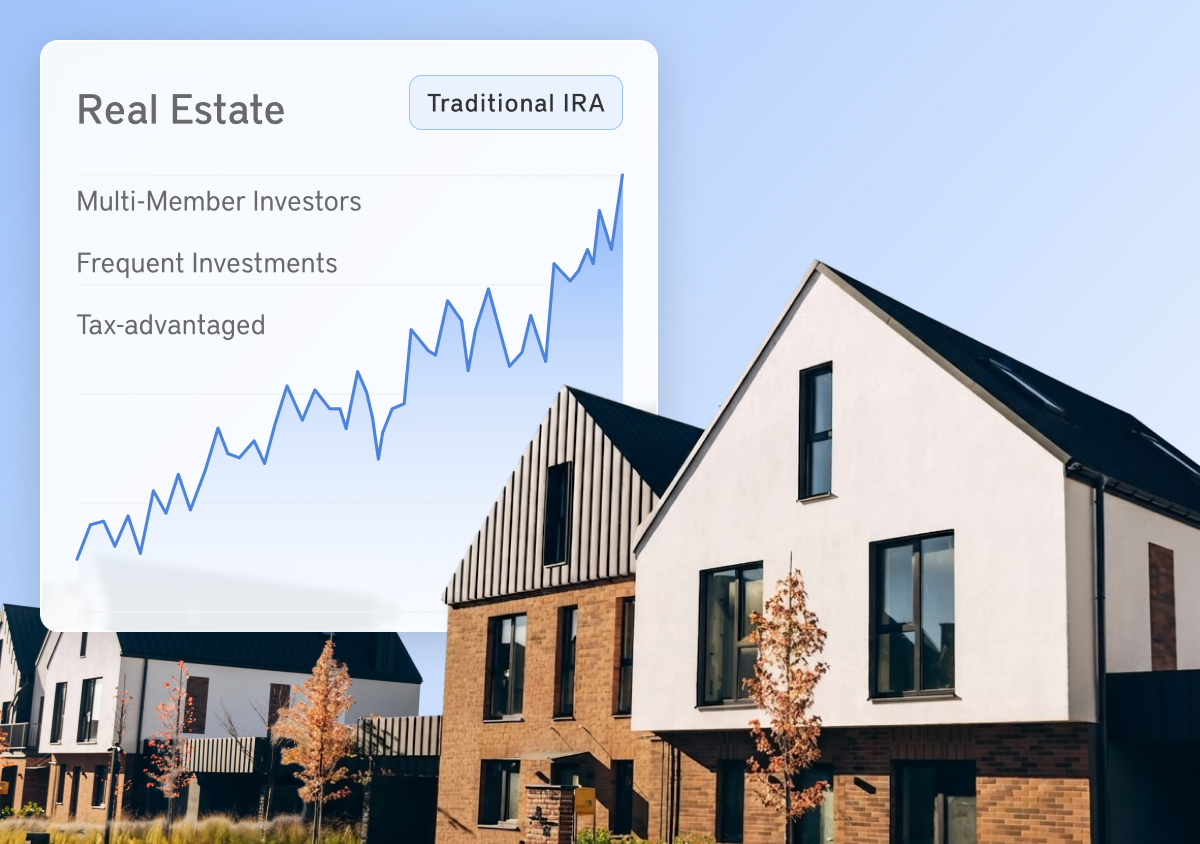
A Real Estate IRA lets you buy property (rentals, land, notes, commercial) inside a retirement account instead of the stock market. Rent and sale proceeds return to the account, where they grow tax-deferred, or tax-free in a Roth.
- You choose the property. We handle custody and compliance.
- Flat annual fee, never a percentage of your property value.
- Works with the retirement money you already have.
No obligation. Talk to a real estate specialist, not a call center.
Self-Directed IRA
$495
Checkbook IRA
$999
Solo 401(k)
$999
27,000+
Clients in all 50 states
$8B+
Assets under administration
97%
Client retention rate
$0
Transaction & asset-value fees
AS SEEN IN





What is a Real Estate IRA?
A Real Estate IRA is a Self-Directed IRA used to hold real estate. It is a normal IRA for tax purposes, whether Traditional, Roth, SEP, or SIMPLE, but instead of being limited to stocks and mutual funds, the account can buy an actual property. Your IRA, or an LLC owned by your IRA, is the buyer of record. Rent and sale proceeds go back into the account, and every expense is paid out of it.
“Real estate IRA” is not a separate IRS account type. It is simply what investors call a self-directed account used for real estate: the IRA (or, with a Checkbook IRA, the IRA-owned LLC you control) is the buyer, and all property income and expenses must flow through the retirement account.

A regular IRA at a bank or broker
- Stocks, bonds, and mutual funds only
- No real estate, no notes, no tax liens
- A fund manager decides what you can hold
- Expense ratios scale with your balance

A Real Estate IRA at IRA Financial
- Buy rentals, land, notes, liens, syndications
- You pick the deal, with direct investment authority
- $495 flat annual fee, $0 per transaction
- In-house tax and compliance team
How real estate IRA investing works
Buying property with retirement funds requires a self-directed account. Your IRA (or IRA-owned LLC with checkbook control) is the buyer, and all property income and expenses must flow through the retirement account.
Money that stays inside the IRA
- Rent, proceeds from a sale, refunds and credits.
- Nothing is distributed to you personally until you take a normal retirement distribution.
Costs that must be paid from the IRA
- Property taxes, insurance, HOA dues, repairs, landlord-paid utilities, property management, and closing costs, always from account funds and never your own.
Whose name is on title
The IRA takes title, not you. With a Checkbook IRA, the IRA-owned LLC takes title and signs, which is how investors close on time-sensitive deals.
Why IRA Financial?
Flat pricing
IRA Financial charges one flat fee, not a percentage of your property value that grows as it appreciates.
Full-service setup
From LLC formation to closing support, a dedicated team handles the operational work. You stay focused on the investment decisions.
Compliance built in
Real estate investing comes with strict IRS rules. IRA Financial keeps your account aligned with them and documents each step.


Can I invest my 401(k) in real estate?
Yes, but not from a typical employer plan, which limits you to its fund menu. There are two ways to invest 401(k) funds in real estate: roll the money into a Self-Directed IRA, or, if you have self-employment income, open a Solo 401(k) and invest directly from the plan.
Do not cash out
Withdrawing 401(k) money for a real estate purchase generally means ordinary income tax plus a 10% early-withdrawal penalty before age 59½. A rollover into a self-directed account is not a taxable event and keeps the full balance working for you.

Route 1: Roll your 401(k) into a Self-Directed IRA
Best if you have a 401(k) from a former employer. A direct rollover moves the funds with no tax or penalty, and the IRA can then buy property, notes, or liens. Rollovers do not count toward annual contribution limits.

Route 2: Use a Solo 401(k)
If you have self-employment income, the Solo 401(k) is the strongest way to invest retirement funds in real estate. Unlike IRAs, 401(k) plans are exempt from UBTI when leverage is used, and you can borrow up to $50,000 from the plan tax-free.
What real estate investments can I make with a Real Estate IRA?
Almost any domestic or foreign real estate asset, as long as the transaction follows IRS rules. Direct ownership is only one option. Many investors start with notes, liens, or syndications because the entry amounts are smaller.
Raw Land Investing
Undeveloped land held for appreciation, plus new construction and development projects.
Residential Investing
Single-family homes and townhouses bought and held by your retirement account.
Rental Property Investing
Long-term rentals and short-term or vacation rentals, with rent flowing back to the account.
Commercial Property
Office, retail, industrial, self-storage facilities, and mobile home parks.
Real Estate Notes and Options
Hold mortgage notes, seller financing, and purchase options instead of the property itself.
Tax Liens and Tax Deeds
Tax lien certificates, tax deeds, and redemption deeds, a low-entry way to start.
Syndications and Private Placements
LP and LLC interests in sponsored deals, funds, and real estate crowdfunding offerings.
Fix-and-Flip Investing
Buy, renovate through third-party contractors, and resell, all inside the account.
Multi-Family and Other Residences
Duplexes, mobile homes, apartment buildings, and condos.
Real Estate IRA vs. Solo 401(k) for Real Estate
Both accounts can hold real estate. Which one fits depends on whether you have self-employment income, how often you transact, and whether you plan to use leverage.
| Real Estate IRA vs. Solo 401(k) | Self-Directed IRA | Solo 401(k) |
|---|---|---|
| Who qualifies | Anyone with an IRA or eligible rollover | Self-employed with no full-time employees |
| UBTI when using a loan | May apply on debt-financed income | Exempt on leveraged real estate |
| Loan from the account | Not permitted | Up to $50,000, tax-free |
| Signing authority | Custodian, or you via a Checkbook IRA LLC | You, as plan trustee |
| Annual fee at IRA Financial | $495 flat ($999 first year with checkbook control) | $999 first year, $399 annually after |
How to set up a Real Estate IRA
Four steps from opening the account to closing on the property.
01
Open your account
Choose the structure that fits how you invest: Self-Directed IRA, Checkbook IRA, or Solo 401(k).
02
Get your account number
Once reviewed and approved, you receive your account number and full access to our online platform.
03
Fund your account
Transfer or roll over an existing IRA or 401(k), or make a direct contribution. Rollovers are not taxable events.
04
Execute the purchase
Submit earnest money, close on the property, then run income and expenses through the retirement account.
Ready to start?
Open your account in 10 minutes.
Choose the right account and keep your fees flat
Many providers charge asset-based fees that rise as your property appreciates, quietly eating into rental income and long-term returns. IRA Financial uses flat pricing built for investors who hold real estate long term, so your fee stays the same whatever the property is worth.
View full fee schedule for a detailed breakdown of all account types, add-ons, and service fees.
Self-Directed IRA
$495
/ annually
- Free setup fee
- Custodian-controlled. Ideal for a single, less hands-on holding
- No transaction or asset-value fees
Checkbook IRA
$999
/ first year, $495 after
- Total control through an IRA-owned LLC
- Dedicated LLC bank account
- No transaction or asset-value fees
Solo 401(k)
$999
/ first year, $399 after
- No UBTI on leveraged real estate
- Borrow up to $50,000 tax-free
- Plan documents, Form 5500-EZ, audit protection
How to invest in real estate with no money out of pocket
You still need capital, but it does not have to be your personal savings. Retirement dollars you already have, partners, and non-recourse financing are the three levers investors actually use.

Use retirement funds you already have
An old 401(k) or IRA can fund the purchase inside the account, with no new savings and no taxable withdrawal.
Partner with other investors
Your IRA can co-invest with other IRAs, individuals, or entities, provided the structure follows IRS rules.
Non-recourse leverage or low-entry assets
A non-recourse loan can finance part of a purchase; notes, tax liens, and syndications let you start with far less.
The Checkbook IRA: when speed and control matter
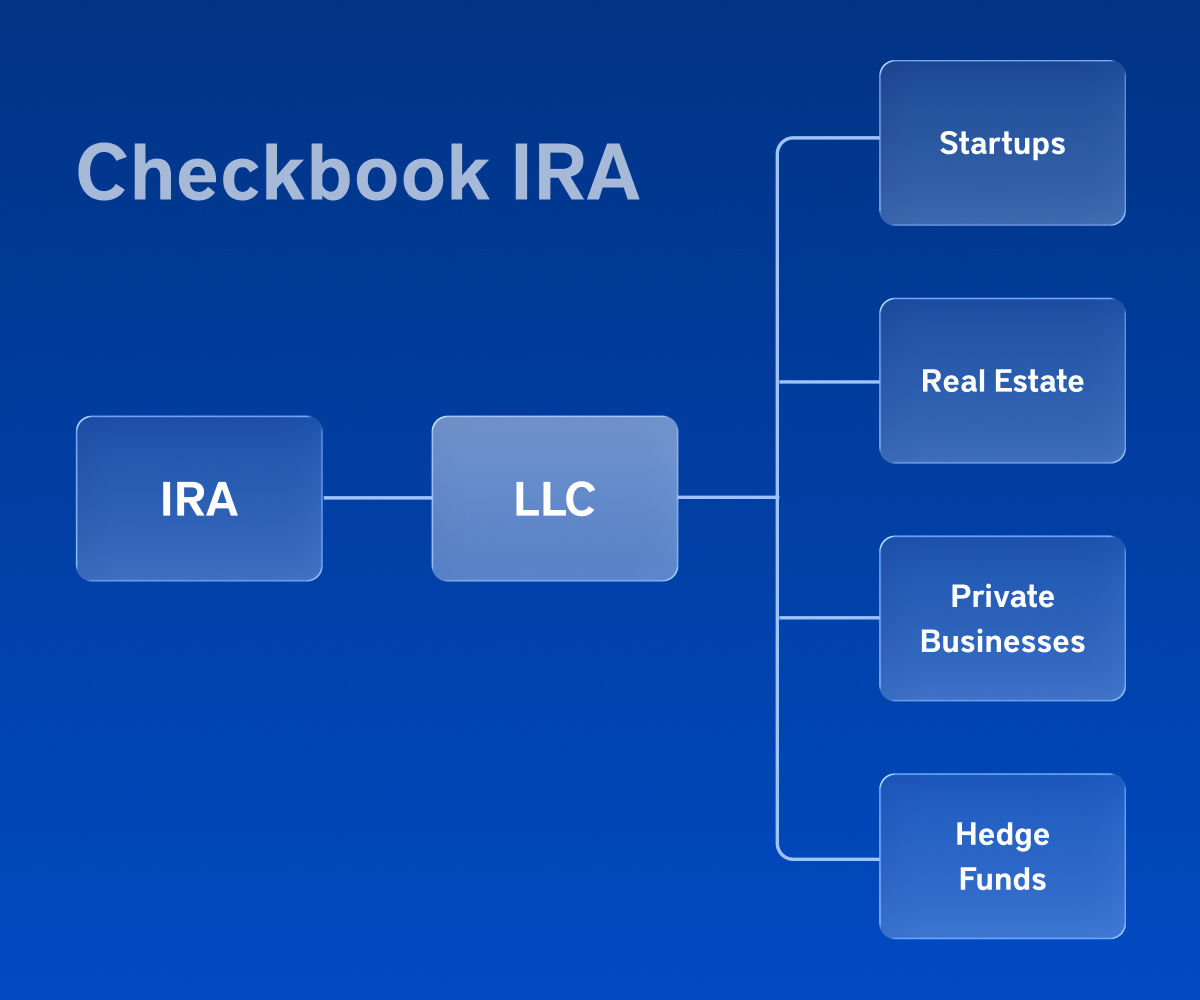
A Checkbook IRA adds an LLC to your self-directed account, giving you direct signing authority to execute any investment the moment you decide, with no paperwork, no processing queue, and no third-party sign-off on each deal.
- Wire earnest money the day you go under contract
- Pay a contractor invoice without a custodian queue
- No per-transaction approval on each deal
Self-directed IRA real estate rules you have to follow
Five rules decide whether a real estate IRA deal is compliant. Breaking one can disqualify the entire account, so we review the structure with you before you invest.
Who can use the property
Allowed: rent to unrelated third-party tenants at market terms. Prohibited: you or family living in, vacationing in, or storing anything at the property.
Who you can transact with
Allowed: buy from, sell to, and hire unrelated parties. Prohibited: deals with disqualified persons, meaning you, your spouse, parents, grandparents, children, grandchildren, or entities you control.
Paying expenses
Allowed: taxes, insurance, HOA, repairs, and management paid from IRA or LLC funds. Prohibited: paying out of pocket and reimbursing yourself later, or mixing personal and IRA money.
Doing the work
Allowed: hire third-party contractors and property managers, paid by the account. Prohibited: sweat equity, meaning performing the repairs or improvements yourself.
Financing the purchase
Allowed: a non-recourse loan secured only by the property. Prohibited: a conventional mortgage or any loan you personally guarantee.
Debt-financed income
Debt-financed rental income can trigger UBTI inside an IRA. A Solo 401(k) is exempt on leveraged real estate, which is why self-employed investors often use one.
Breaking any one of these rules can disqualify the entire IRA. Talk to a specialist before you sign a purchase agreement.
Why invest in real estate for retirement
Tax-advantaged income
Rental income and gains are generally tax-deferred, or tax-free in a Roth IRA.
Inflation protection
Real estate is a hard asset, and rents can generally be adjusted annually as costs rise.
No UBTI in a 401(k)
401(k) plans owe no UBTI tax when leverage is used to purchase real estate.
Faster transactions
Checkbook control and simplified processing reduce the risk of missing time-sensitive deals.
Built-in asset protection
Holding property inside a retirement account isolates risk from your personal balance sheet.
Custodial support
We handle purchase logistics, IRS compliance, and reporting so you can focus on the deal.
4.7/5
Trustpilot score
In-house
Tax and compliance team on every deal

Hear from our clients
I appreciate that I can ask questions about rules prior to making an investment to make sure I am compliant. I have invested in land, rentals, and home flips.

Alicia G.
I’ve looked at all of the participants in this space and IRA Financial was the clear choice. The process is straight forward and there are no surprises. My investments in real estate have been largely successful.

Dean F.
I decided to open a Self-Directed IRA because I wanted to invest in real estate projects. Being able to decide where and when to invest has been very successful for me. All the real estate projects I have selected have been solid investments.

Rene F.
Real Estate IRA FAQs
Answers to some of the most commonly asked questions about Real Estate IRAs
A Real Estate IRA is a Self-Directed IRA that allows you to invest your retirement funds directly in real property, such as rental homes, raw land, and commercial buildings. The IRA, not you personally, holds title to the property, and all income and expenses flow through the IRA to preserve its tax-advantaged status.
Yes. Your IRA can purchase a rental property, and all rental income is deposited back into the IRA tax-deferred (or tax-free with a Roth). All property-related expenses, including repairs, taxes, and insurance, must also be paid directly from IRA funds.
In most cases, an active 401(k) plan restricts investment options set by the employer. However, funds from a former employer’s 401(k) can typically be rolled over into a Self-Directed IRA, which can then be used to invest in real estate.
Cashing out a 401(k) generally triggers income taxes and, if you are under 59½, a 10% early withdrawal penalty. A tax-free and penalty-free rollover into a Self-Directed Real Estate IRA is typically a more efficient way to redirect retirement funds into real estate.
No. IRS rules prohibit you or certain disqualified persons (such as your spouse, children, parents, and other lineal descendants) from personally living in, vacationing at, or otherwise using property owned by your IRA. The property must be held strictly for investment purposes.
A disqualified person includes the IRA holder, their spouse, ancestors, lineal descendants and their spouses, as well as any entity in which a disqualified person holds a controlling interest. Transactions between your IRA and a disqualified person are prohibited and can jeopardize the IRA’s tax-advantaged status.
All expenses related to an IRA-owned property, including repairs, maintenance, property taxes, insurance, and utilities, must be paid directly from the IRA, not out of pocket. Likewise, all income the property generates must flow back into the IRA.
Yes. Your IRA can use a non-recourse loan to help finance a real estate purchase. Because the loan cannot be personally guaranteed, financing typically requires a larger down payment, and a portion of the income may be subject to Unrelated Debt-Financed Income (UDFI) tax.
A Checkbook IRA, structured through an IRA-owned LLC, gives you direct checkbook control over IRA funds, which can make time-sensitive real estate purchases and ongoing property expenses faster and easier to manage without going through a custodian for every transaction.
Yes. Your IRA can co-invest alongside other IRAs, individuals, or entities in a real estate deal, as long as the investment terms are fair to the IRA at the time of purchase and no disqualified persons are involved in a way that creates a prohibited transaction.
IRA Financial offers flat, transparent annual fees for Real Estate IRAs with no asset-based fees or transaction charges, regardless of how many properties your IRA holds. Contact an IRA Financial specialist for current pricing details.
Ready to Buy Real Estate with Your Retirement Funds?
Whether it’s a rental property, raw land, or a commercial deal, a Self-Directed Real Estate IRA puts you in control of where your retirement dollars go.

#1 IRS Audit Protection

Flat Rate, No Hidden Fees

Expert Live Support

Total Investment Freedom