

Your Self‑Directed IRA without the limitations
Invest across alternatives and traditional assets. One platform. One flat fee. No paperwork.

What is a Self‑Directed IRA?
A Self-Directed IRA (SDIRA) is a tax-advantaged retirement account that expands your investing power beyond traditional stocks and mutual funds. As a type of self-directed retirement account, it gives you the ability to build a diversified portfolio with assets like real estate, private equity, cryptocurrency, precious metals, and more.

Regular IRA
- Stocks, bonds, and mutual funds only
- Fund manager controls what you can hold
- Expense ratios and management fees eat into returns
- No real estate, no crypto, no private equity
- No direct investment authority

Self‑Directed IRA
- No asset restrictions. Alternative and traditional assets
- No fund manager. Decide where every dollar goes
- $495 flat annual fee. $0 per transaction
- Every IRS-permitted asset class available
- Direct investment authority. No approvals, no delays
Self-Directed IRA: The Ultimate Guide
Understand exactly what your IRA can hold, what it cannot, and how to stay IRS-compliant, before you open an account.
Why IRA Financial?
Flat pricing
IRA Financial charges one flat fee, not expense ratios that scale with your balance. Your cost stays the same regardless of account size.
Full-service setup
From LLC formation to custodial support, a dedicated team handles the operational work. You stay focused on the investing decisions.
Compliance built in
Self-directed retirement comes with IRS rules. IRA Financial keeps your account aligned with them and documents each step.

27,000+
Active accounts
$8B+
Assets under administration
97%
Client retention rate
4.7/5
Trustpilot score
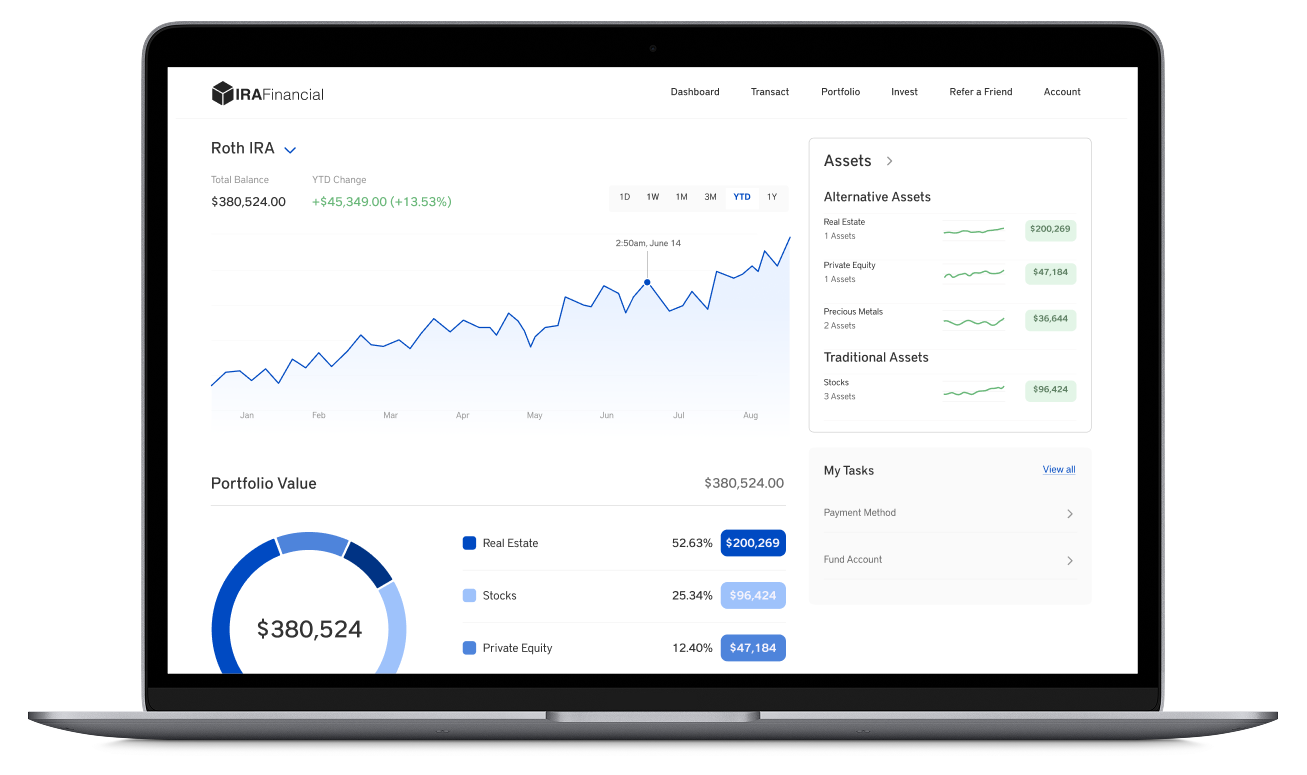
Every investment you own. One screen.
Alternatives, crypto, stocks, and ETFs on one dashboard. No other SDIRA platform shows everything in one view. See your full position in real time.
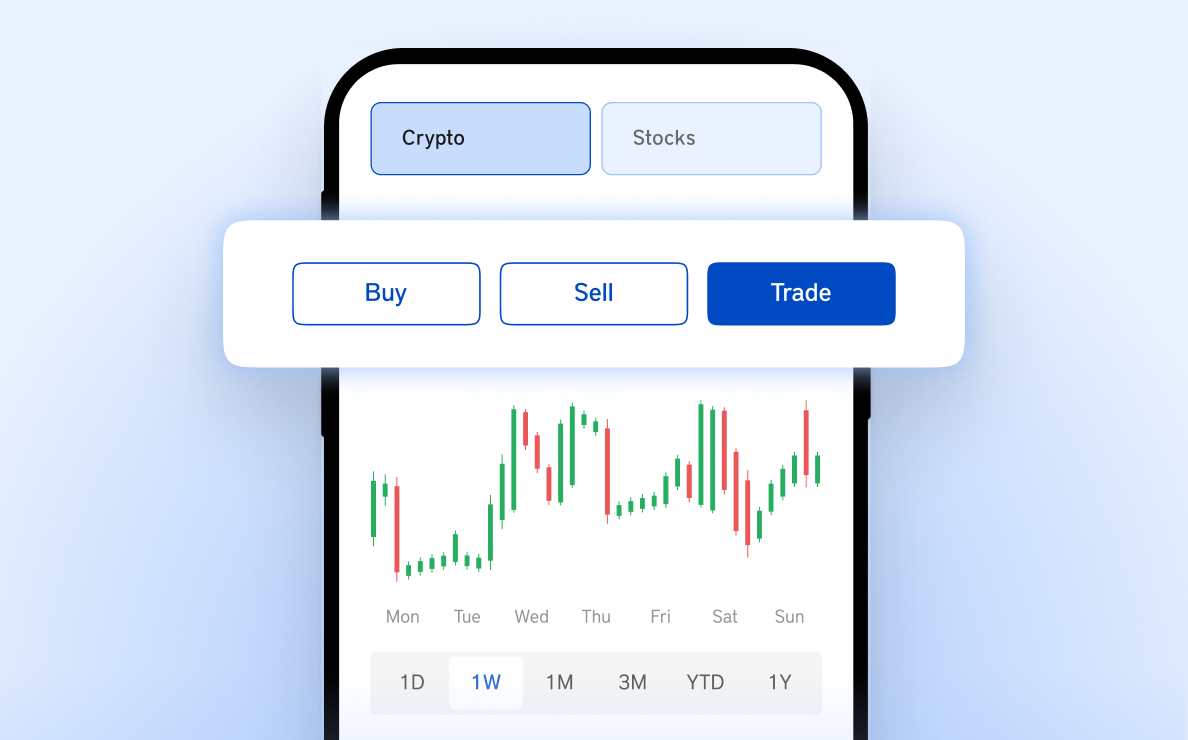
The only Self‑Directed IRA
built for everything.
Trade stocks, ETFs and crypto directly inside your IRA Financial account. Or send funds to any outside investment: real estate, private equity, a fund. One account. No switching platforms.
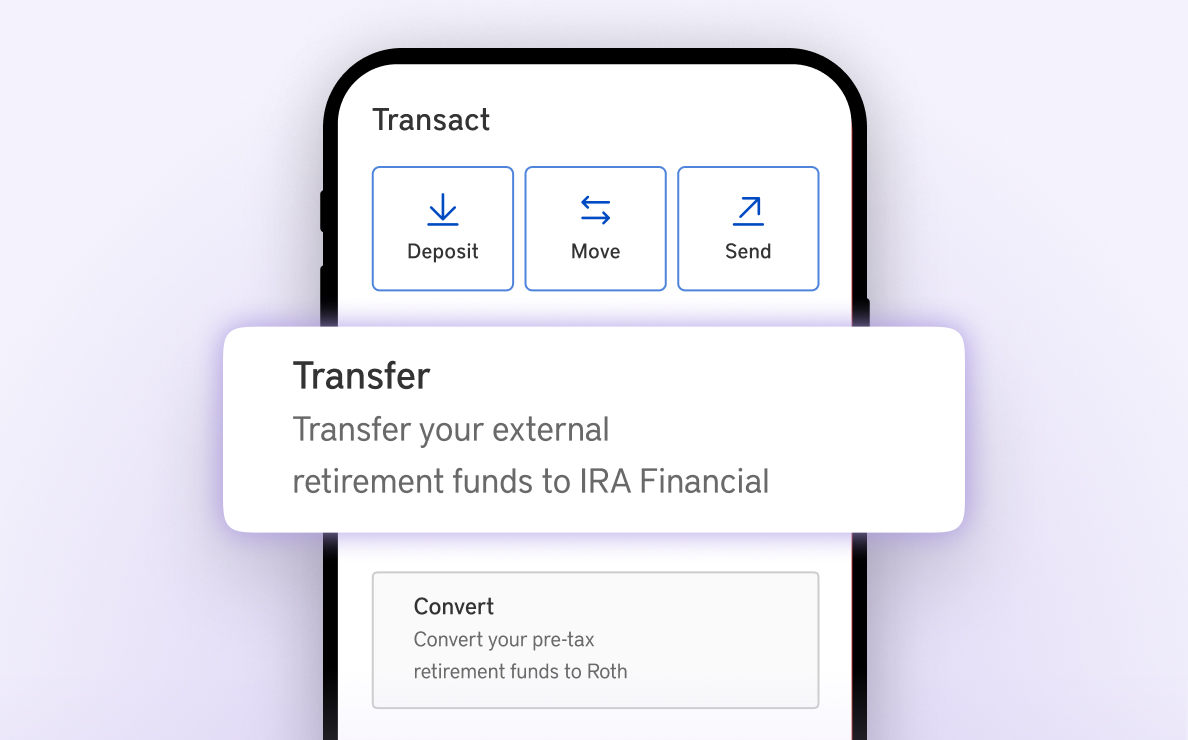
Send money to any investment. No forms. No custodian queue.
Wire to a title company, fund a private deal, send to any recipient directly from your account. Set up recurring contributions and Roth conversions in the same tab. No paperwork to mail.
Every asset class. One account.
No other provider holds this range of assets inside a single tax-advantaged retirement account.

Real Estate
Own property directly in your retirement account, from land to rentals. Income and proceeds stay within the account's tax treatment.
Farmland
Commercial Real Estate
Raw Land
Industrial Property
Short-term Rentals
Residential Rental Properties


Crypto
Trade major cryptocurrencies in real time, held alongside the rest of your portfolio.
Bitcoin (BTC)
Ethereum (ETH)
Litecoin (LTC)
Ripple (XRP)
Cardano (ADA)
Polkadot (DOT)

Public Markets
Build a core portfolio with stocks, ETFs, and bonds. Stock and ETF trades carry no per-trade fees.
Stocks
ETFs
Bonds
Mutual Funds
Currency/Forex

Private Placements
Invest in private companies and funds that are rarely available in a standard retirement account.
Startups
Reg D & Reg A+ Offerings
LLC & LP Interests
Private Company Stock

Precious Metals
Add IRS-approved metals to your account, stored and reported for you.
Gold
Silver
Platinum
Palladium

Tax Liens & Deeds
Invest in tax liens and deeds through your IRA, a category most retirement platforms don't support.
Tax Lien Certificates
Tax Deeds
Redemption Deeds
Over-the-Counter Tax
Tax Lien Funds
Our SDIRA vs other providers
Many Self-Directed IRA custodians charge asset-based fees that grow as your portfolio increases, cutting into your returns. With our flat-fee structure, you pay a predictable, fixed cost; no hidden fees, no percentage-based charges, just full transparency.

| Equity Trust Company | Madison Trust Company | Columbia Private Trust | |
Setup Fee | ||||
Annual Fee | ||||
Investment Fee | ||||
Roth Conversion Fee | ||||
Asset-Based Pricing | ||||
Real-Time Crypto Trading | ||||
Real-Time Public Markets Trading | ||||
In-House Tax & Compliance Service | ||||
Guaranteed IRS Audit Protection | ||||
Trust Pilot Score | ||||
1 Year Total Cost | ||||
5 Year Total Cost |
Three steps. No waiting.
Open a self-directed IRA account, fund it, and start investing. Roll over from any major custodian in 7 business days. Contribute directly. No lockup periods.
01
Open your account
Create your account online in minutes.
02
Fund your account
Roll over an existing IRA or 401(k), or make a direct contribution. Your choice.
03
Start investing
Invest in real estate, crypto, stocks, or any asset your IRA is allowed to hold.
Ready to start?
Open your account in 10 minutes.
Self‑Directed IRA fees
We believe investing for retirement shouldn’t come with complicated fee structures or fine print. You keep more of what you earn, and you stay in control every step of the way.
View full fee schedule for a detailed breakdown of all account types, add-ons, and service fees.
Self-Directed IRA
$495
/ annually
- Free setup fee
- Best value self-directed solution
- Invest in almost anything you want
- Use a traditional, Roth, SEP, SIMPLE, ESA, or HSA
- No transaction or asset value fees
Add more to your strategy
Every add-on extends what your account can do. No other custodian offers this combination.
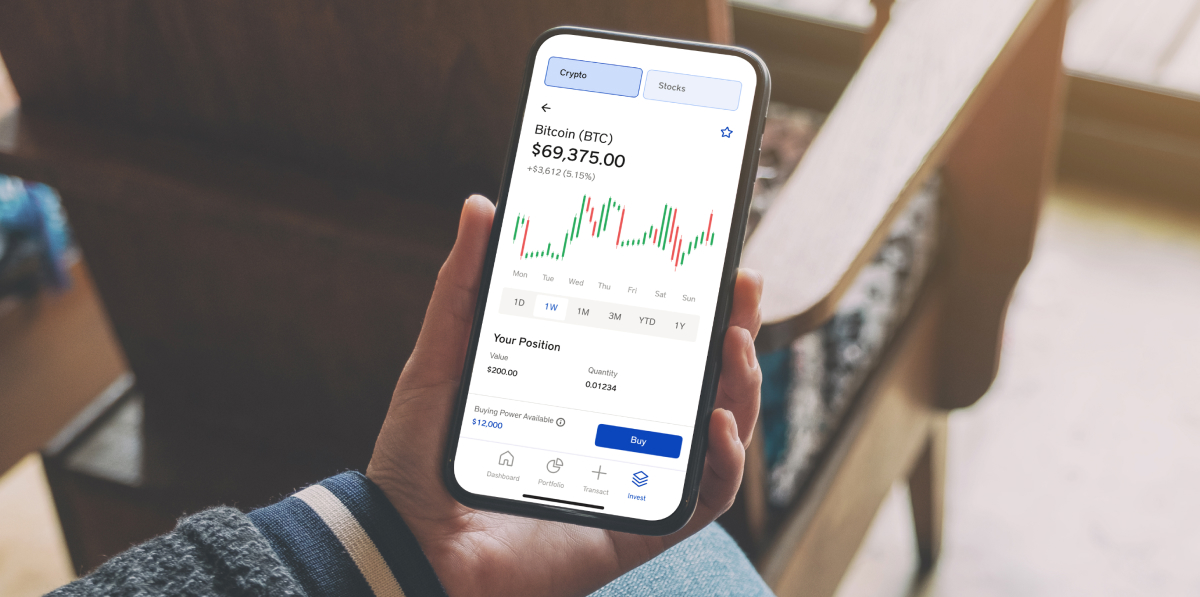
Stocks, ETFs, and Bonds
$100/yr
Add public markets to your SDIRA without opening a second account. Trade US listed stocks and ETFs at $0 commission, alongside your alternatives — all on one dashboard.
Crypto
Included
Trade Bitcoin, Ethereum, Solana, and 60+ digital assets directly inside your IRA Financial account. No third-party exchange. No wallet management. Gains compound tax-advantaged.
Tax Filing Services
Inquire
SDIRA accounts generate specific IRS filings — Form 5498, 1099-R, and UBTI returns if your investments generate unrelated business taxable income. Our in-house CPAs handle all of it. Audit defense included.
Invest without waiting on custodian approval?
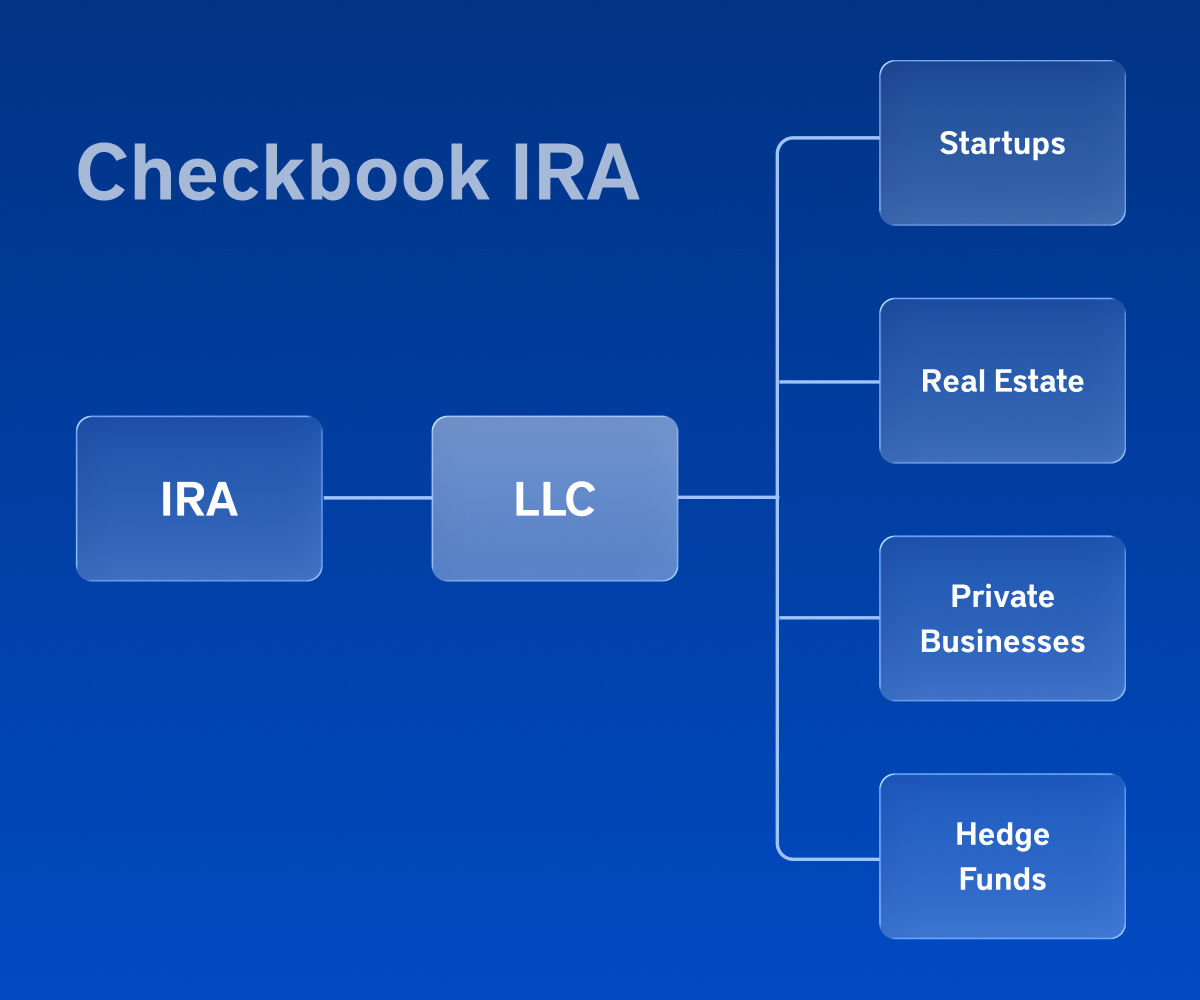
A Checkbook IRA adds an LLC to your self-directed account, giving you direct signing authority to execute any investment the moment you decide — no paperwork, no processing queue, no third-party sign-off on each deal.
- Execute deals the same day you find them
- Wire funds directly from your LLC bank account
- No custodian approval required per transaction
Self‑Directed IRA rules and requirements
Contribution limits
$7,000 per year. $8,000 if you are 50 or older. Limits apply across all your IRAs combined, not per account. Rollovers and transfers do not count toward the annual limit.
Eligibility
Anyone with earned income can contribute to a Traditional SDIRA. Roth contributions phase out at $150,000 (single) and $236,000 (married filing jointly) in 2025. No age restriction on contributions.
Prohibited transactions
No life insurance contracts, collectibles, or transactions with disqualified persons — yourself, your spouse, lineal ascendants and descendants, or entities they control. Violations trigger immediate distribution and tax penalties.
Required minimum distributions
Traditional SDIRAs require minimum distributions starting at age 73, calculated annually from your balance and IRS life expectancy tables. Roth SDIRAs have no lifetime RMD requirement for the original account owner.
Early withdrawals
Generally subject to a 10% penalty plus ordinary income tax on the distributed amount. Exceptions apply for first-time home purchase, qualified education expenses, and permanent disability.
Unrelated business taxable income
If your SDIRA invests in an operating business or uses debt financing to purchase an asset, that income may be subject to UBTI tax — even inside a tax-advantaged account. IRA Financial’s CPAs handle UBTI filings when required.
Contribution limits and phase-out thresholds update annually. Always verify current figures before contributing.

Hear from our clients
I have been a client of IRA Financial for several years and I really love them. I’ve worked with other companies, and they just were not as easy to work with. I appreciate being able to get somebody on the phone and getting help with taxes. Everything has been so easy to work with.

Paul S.
I’ve looked at all of the participants in this space and IRA Financial was the clear choice. They were the easiest to work with, answered all my questions and concerns prior to me taking the steps to open the account. The process is straight forward and there are no surprises.

Dean F.
I decided to open a SDIRA because I wanted to invest in real estate projects. Also, having control of my money was a big motivating factor as well. Being able to decide where and when to invest has been very successful for me. I’ve recommended IRA Financial to friends and family.

Rene F.
Self-Directed IRA FAQs
Answers to some of the most commonly asked questions about Self-Directed IRAs
SDIRA stands for Self-Directed Individual Retirement Account. It’s a retirement account that lets you invest in alternative assets like real estate, crypto, and private equity—beyond traditional stocks and bonds. SDIRAs offer tax advantages and greater control but must be held by a custodian and follow IRS rules to avoid prohibited transactions.
A Self-Directed IRA is a tax-advantaged retirement account that allows you to invest in a broad range of alternative assets—including real estate, private equity, precious metals, cryptocurrency, and tax liens—beyond the stocks and mutual funds typically available in traditional IRAs.
With an SDIRA, you have full control over your investment choices, while a specialized custodian holds the assets and ensures IRS compliance. Unlike banks or brokers, SDIRA custodians do not provide investment advice—you’re responsible for managing your own strategy. These accounts also come with strict IRS rules. You must avoid prohibited transactions, such as investing in assets that personally benefit you or dealing with disqualified persons (like family members). All income and gains must flow through the IRA to maintain its tax-advantaged status.
For 2026, you can contribute up to $7,500 plus an additional $1,100 catch-up contribution if you are age 50 or older. IRA contributions can be made in pretax, after-tax and Roth.
Yes, you can have as many as you want. However, the annual IRA contribution limit applies to every plan you have in the aggregate.
When it comes to making investments with a Self-Directed IRA, the IRS generally does not tell you what you can invest in, only what you cannot invest in. The types of investments that are not permitted to be made using retirement funds is outlined in Internal Revenue Code Section 408 and 4975. These rules are generally known as the “Prohibited Transaction” rules. Other than life insurance, collectibles, and transactions that involve or directly or indirectly benefit the IRA holder or a “disqualified person,” one can use their IRA to make the investments.
The most popular investments include:
- Real Estate
- Private placements
- Cryptocurrency
- Precious Metals
- Investment funds
- Real estate funds
- Private business investments
A disqualified person is anyone prohibited from engaging in certain transactions with your Self-Directed IRA under IRS rules. This includes you (the IRA owner), your spouse, your parents, grandparents, children, grandchildren, and their spouses, and any entity where you or a disqualified person own 50% or more. Your Self-Directed IRA cannot buy, sell, loan money to, or otherwise transact with disqualified persons, as doing so would trigger prohibited transaction rules, potentially leading to taxes and penalties. Understanding these restrictions is crucial to keeping your retirement account compliant.
You can withdraw funds from your Self-Directed Traditional IRA at any time, but if you’re under 59½, you’ll face a 10% early withdrawal penalty plus income taxes. After 59½, you’ll only pay taxes on withdrawals.
For a Self-Directed Roth IRA, you can withdraw your contributions at any time tax- and penalty-free. However, to withdraw earnings without penalties or taxes, your account must be open for at least five years, and you must be 59½ or older. If you’re looking to access your retirement funds early without penalties, strategies like a Solo 401(k) loan may be worth exploring.
A required minimum distribution (RMD) is the amount you must withdraw from your traditional IRA once you turn 73. The amount is generally about 3% of the total account balance.
With a Self-Directed IRA, you can move funds through transfers or rollovers, depending on the type of account change:
- Transfers – Move funds between similar accounts (Self-Directed IRA to Self-Directed IRA).
- Rollovers – Move funds from one account type to another (401(k) to Self-Directed IRA).
There are two ways to move funds:
- Direct Transfers/Rollovers – Funds go directly from one IRA custodian to another, avoiding taxes or penalties.
- Indirect Transfers/Rollovers – Funds are sent to you first. You’ll have 60 days to deposit them into your Self-Directed IRA to avoid taxes and penalties.
Administrators usually handle the day-to-day management of the Self-Directed IRA, which can include tasks like setting up investments and assisting with record-keeping.
Custodians are responsible for holding and safeguarding your assets while ensuring compliance with IRS regulations. This includes providing account statements, processing contributions, and facilitating distributions when needed.
Facilitators typically help with specific investment opportunities like real estate, cryptocurrency, or private equity, often providing more hands-on guidance.
More on Self‑Directed IRAs



Why Self-Directed IRA Fees Really Matter
When investors evaluate retirement accounts, they typically focus on investment performance. They compare returns, asset classes, and market…

Carried Interest in Your Roth IRA: What Investment Professionals Need to Know
For private equity managers, venture capital sponsors, real estate syndicators, and hedge fund managers, a carried interest is often the most…
Ready to Invest in Your Future?
Whatever strategy you plan for retirement, we do it all. Build your retirement with a Self‑Directed IRA designed for alternative and traditional investments.

#1 IRS Audit Protection

Flat Rate, No Hidden Fees

Expert Live Support

Total Investment Freedom